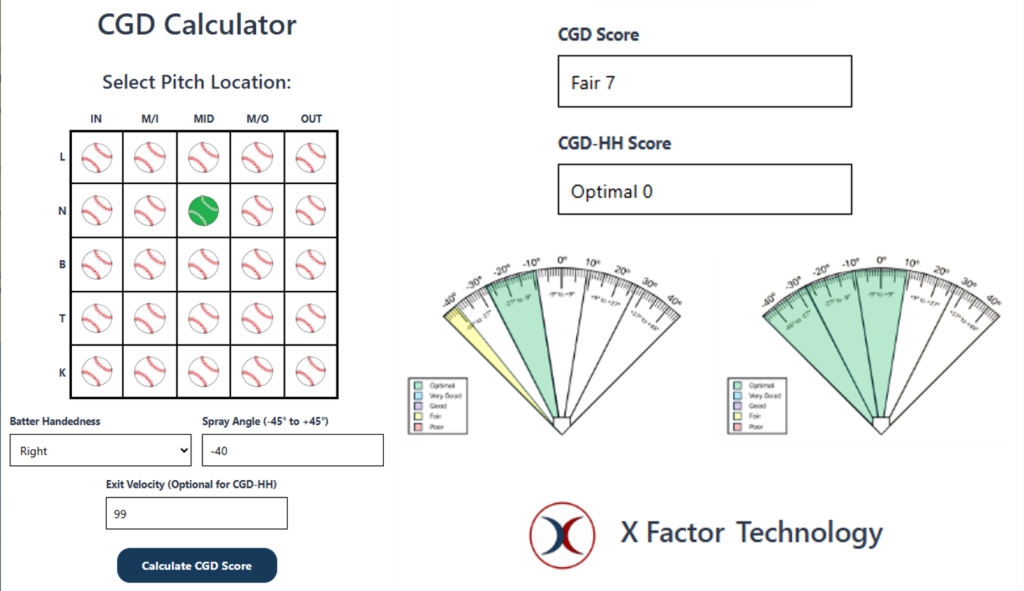
This calculator evaluates a batted ball at the collision level by measuring how closely the contact event matched the expected geometric solution for that pitch location. It scores deviation in the variables that matter at intercept, contact depth, barrel orientation, and directional commensurability, rather than relying only on downstream outcomes such as launch angle or result. Also included is a power adjusted (CGD-HH) calculation. The calculator is grounded in causal geometry, not descriptive output. It does not judge mechanics or swing style. It measures how cleanly the hitter solved the collision problem, providing an objective reference for comparing contact quality across batted balls.
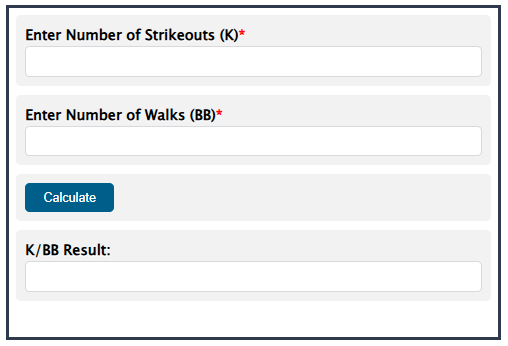
This calculator measures the relationship between a hitter’s strikeouts and walks by converting those totals into a simple strikeout-to-walk ratio. It provides a clean reference for evaluating plate outcome tendencies, showing how often a batter strikes out relative to how often they earn a walk. The calculator does not interpret approach, discipline, or offensive value on its own. It isolates the raw relationship between the two events and expresses it in a form that is easy to compare across players, seasons, or sample sets.
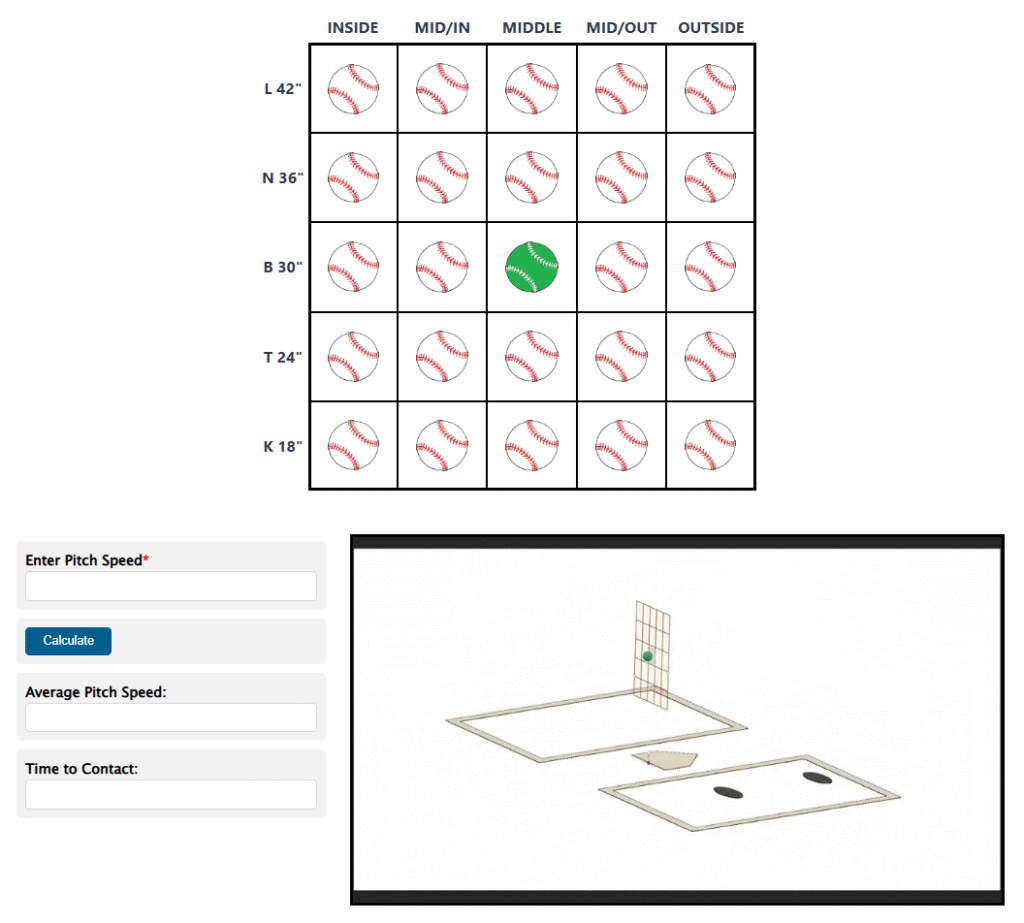
This calculator converts a single pitch velocity for the middle locationinto precise travel times for all 25 strike zone locations, reflecting the spatial reality that pitches arrive at different depths depending on their location. It is built on objective geometry, not ideology. The calculator is agnostic to swing style or approach. It simply defines where the ball will be, and when, across the 3D grid. By isolating these arrival points, it creates a universally relatable reference that can be applied to any swing model, player type, or evaluation system.
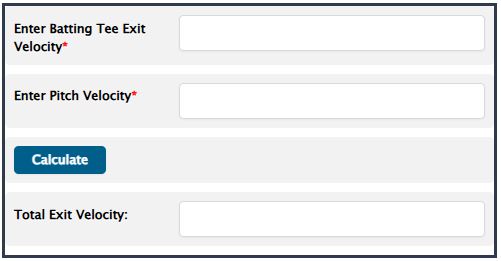
This calculator estimates real-world exit velocities by starting with a baseline measurement from a batting tee, captured using a Pocket Radar or similar device. It then adds the contribution of pitch velocity to account for the energy transfer from the incoming pitch. The result is a more accurate projection of in-game exit velocity.
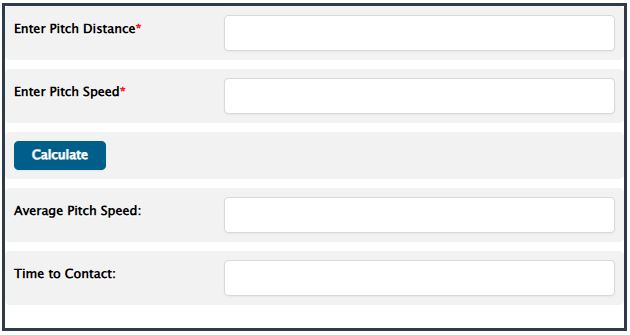
This calculator determines the average speed of a pitch over a selected travel distance (accounting for air resistance) and the corresponding time to contact. By relating velocity to distance traveled, it reduces the pitch event to two objective constraints, how fast the ball moved through the measured segment and how long it took to arrive. It does not infer pitch quality, deception, or hitter response. It isolates the temporal and spatial reality of the pitch’s flight, providing a direct reference that can be used for timing analysis, comparison, and practical evaluation.
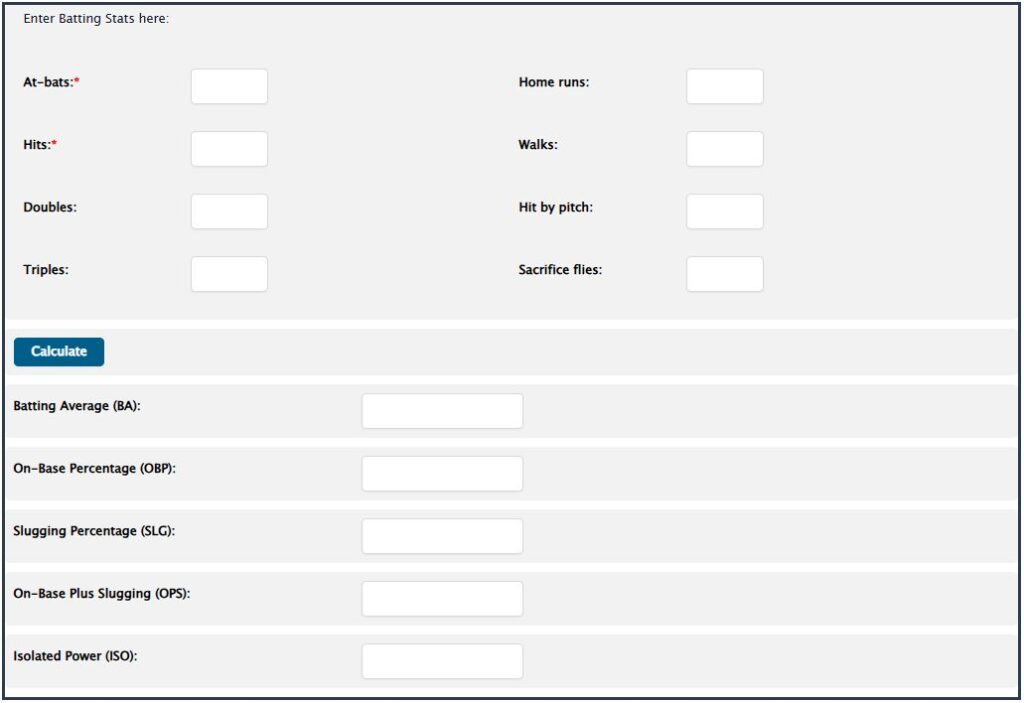
This calculator converts a hitter’s basic offensive totals into five standard rate statistics, Batting Average, On-Base Percentage, Slugging Percentage, OPS, and Isolated Power. By reducing raw batting data to established outcome measures, it provides a direct statistical snapshot of contact production, on-base ability, and power. It does not explain how those outcomes were created, nor does it speak to the quality of the underlying collision event. It simply organizes conventional batting results into a clear evaluative reference for comparing performance across players, seasons, or sample sets.
X Factor Technology's Free
Game-Ready Timing Toolkit Is Here!